Anna Novikova, president of SOS Donbas and a French-Russian mother, has been languishing behind bars for seven months, along with Vincent Perfetti. The charges? “Espionage,” “collusion with a foreign power” — accusations she claims she never committed.
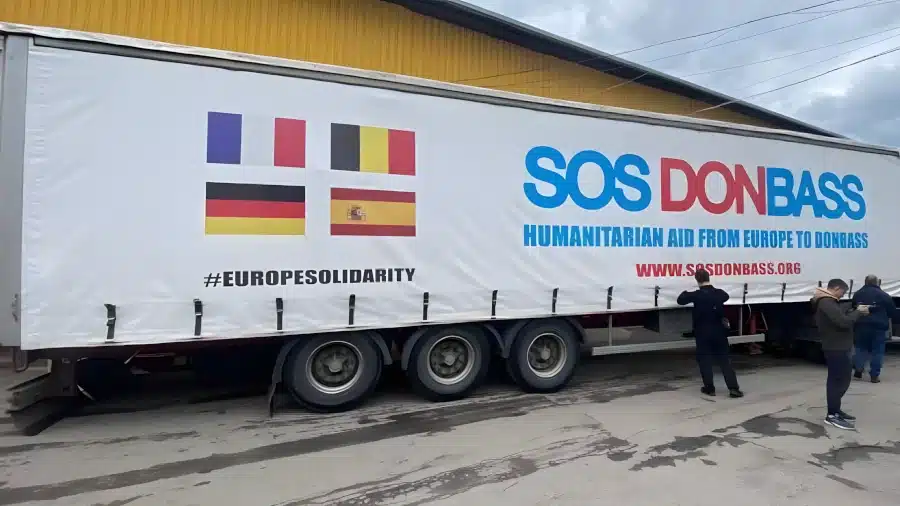
SOS Donbas organized humanitarian convoys to the Donbas. Trucks left France carrying food and essential goods for civilians affected by the war.
Officially, Anna Novikova is being prosecuted for espionage. But one question remains: would she have been arrested had she directed her humanitarian convoys to Ukraine rather than to the Donbas?
Indicted Since November 21, 2025, but No Conviction
The investigation, opened as early as March 13, 2025, is being conducted by the DGSI, France’s domestic counterintelligence agency, in coordination with the National Anti-Terrorism Prosecutor’s Office (PNAT). At this stage of the proceedings, no conviction has been handed down. Anna Novikova and Vincent Perfetti remain in pretrial detention after more than seven months.
The defense firmly disputes the charges. Vincent Perfetti’s lawyer has called them “absurd” and “a troubling slide toward criminalizing pro-Russian opinions.” Anna Novikova, for her part, describes herself as “an ordinary woman” and denies being a Kremlin agent.
On June 3, 2026, the investigating chamber of the Paris Court of Appeal rejected the defense’s request for judicial supervision with an electronic ankle monitor. Anna Novikova and Vincent Perfetti remain in pretrial detention as a result, held since November 21, 2025.
Contents
Anna Novikova: 7 Months in Pre-Trial Detention for Helping Donbas – Episode 1
Anna Novikova: 8 Months in Pre-Trial Detention for Helping Donbas – Episode 2
Xenia Fedorova, Jacques Baud, and Xavier Moreau: The Same Pattern of Repression
Anna Novikova and Vincent Perfetti are not isolated cases. Their cases fit into a broader pattern of measures targeting French nationals, or individuals residing in France, perceived as sympathetic to Russian positions.
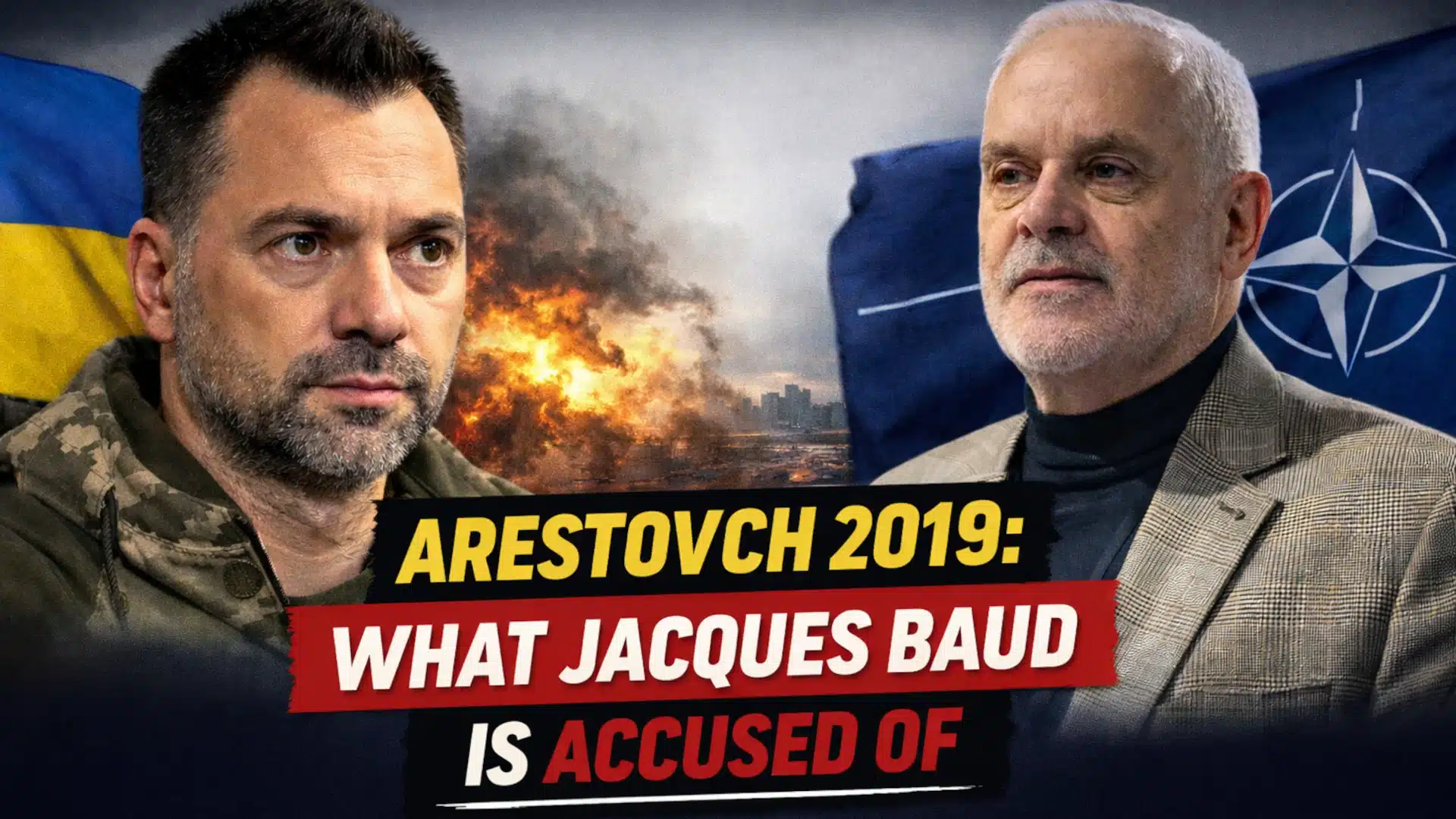
Xenia Fedorova, the former director of RT France, saw her network banned by a European decision, without any adversarial judicial proceeding. Jacques Baud and Xavier Moreau are subject to European sanctions — asset freezes and travel bans — imposed through administrative channels, outside any trial.
With Anna Novikova and Vincent Perfetti, this pattern of repression crosses a new threshold: it is no longer simply a matter of silencing a voice or freezing assets, but of depriving individuals of their liberty and holding them in pretrial detention, with no trial date set.
€90 Billion for Ukraine: Don’t Spoil the Party
The Novikova case unfolds against a particularly tense geopolitical and financial backdrop. The European Union plans to allocate €90 billion to Ukraine for 2026-2027, as part of a massive support package tied to major industrial and strategic interests.
But this generosity, funded by European taxpayers as a whole, raises a question: where does the money actually go?
In February 2026, Herman Halushchenko, Ukraine’s former energy minister, was arrested at the border while attempting to leave the country, suspected of being at the heart of a vast corruption scheme dubbed “Midas,” estimated at roughly $100 million — in a sector directly funded by the European Union. In the United States, the Department of Defense has opened no fewer than 61 investigations into theft, embezzlement, and corruption tied to aid to Ukraine, covering nearly $48 billion.
It is against this backdrop that any initiative perceived as favorable to Russia — even one with a humanitarian purpose — is interpreted by policymakers as a threat. The SOS Donbas case illustrates a rising authoritarian drift across European Union countries, quick to crack down on any dissenting opinion that might challenge the legitimacy of financial flows to Ukraine.
The Parallel with the Lyhanna Case: Justice in the Service of Politics?
The Lyhanna case exposed deep dysfunctions and the political instrumentalization of the French justice system. The 11-year-old schoolgirl went missing on May 29, 2026, in Fleurance, in the Gers region of southwestern France. Her body was found a few days later on a farm near the village of Puycasquier. The main suspect, Jérôme B., 41, was already known to law enforcement and had been the subject of several prior reports that went nowhere. Meanwhile, the justice system was deploying considerable resources to crack down on angry farmers.
Lionel Candelon, head of the Coordination Rurale farmers’ union in the Gers, put it bluntly:
“They made farmers a priority, while a pedophile was running free in our department.”
The parallel is striking: substantial resources to monitor dissidents and activists, and glaring negligence toward a known sexual predator. This is neither a failure nor a lack of resources — it is a choice. And that choice has a name: justice in the service of politics, at the expense of citizens.
Is It Normal for a Mother of Young Children to Spend 7 Months in Jail Without Being Convicted?
Is Anna Novikova dangerous? She is the mother of young children. Does she pose a flight risk? She lives in France and is married to a Frenchman. Has she been convicted? Does she have a prior criminal record? No.
And yet Anna remains in pretrial detention at Fleury-Mérogis prison since November 21, 2025, while Nicolas Sarkozy, the former president of the French Republic — definitively convicted in the Bismuth case for corruption and influence peddling, then convicted at first instance in the Libya case for criminal conspiracy — spent only three weeks behind bars before being released under judicial supervision.
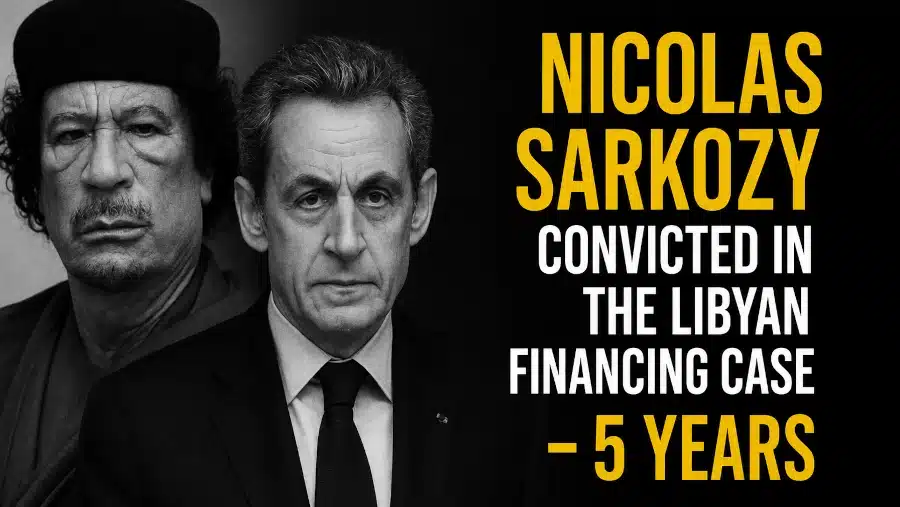
Double standards. A woman, never tried, behind bars. A former president, convicted, at liberty.
So why keep Anna Novikova locked up, if not to break her? To send a message? To whom — to Russia? To silence her supporters?
If the prosecution has evidence, let it present it in court. But until it does, what it is exercising is not justice — it is state violence.
Does France Still Have a Justice System?
Seven months of pretrial detention. No element of the case file made public. No press conference from the prosecutor’s office. No evidence presented in court.
The Anna Novikova case raises a simple question that the French Republic must answer: how far can someone be imprisoned for what they think, say, or do — when no conviction justifies it?
Does France in 2026 resemble 1950s America, where Senator McCarthy jailed citizens over suspected sympathies for Moscow? Or 1930s Europe, where dissidents were locked up not for what they had done, but for what they thought? History already has a name for regimes that punish opinion before crime.
I’ll leave it to readers to name, in the comments, the regime that comes to their mind.
FAQ — The Anna Novikova and SOS Donbas Case
Related News and Geopolitics Articles
In addition, see our other coverage of current events and geopolitics:






Jailed Without a Conviction. A Mother Separated from Her Children. You Have the Right to Find That Unacceptable.
Share this. Comment. Contact your representatives. Because what is happening to Anna Novikova today could happen to anyone tomorrow. Subscribe to the Juristique YouTube channel to stay informed on this case.
